


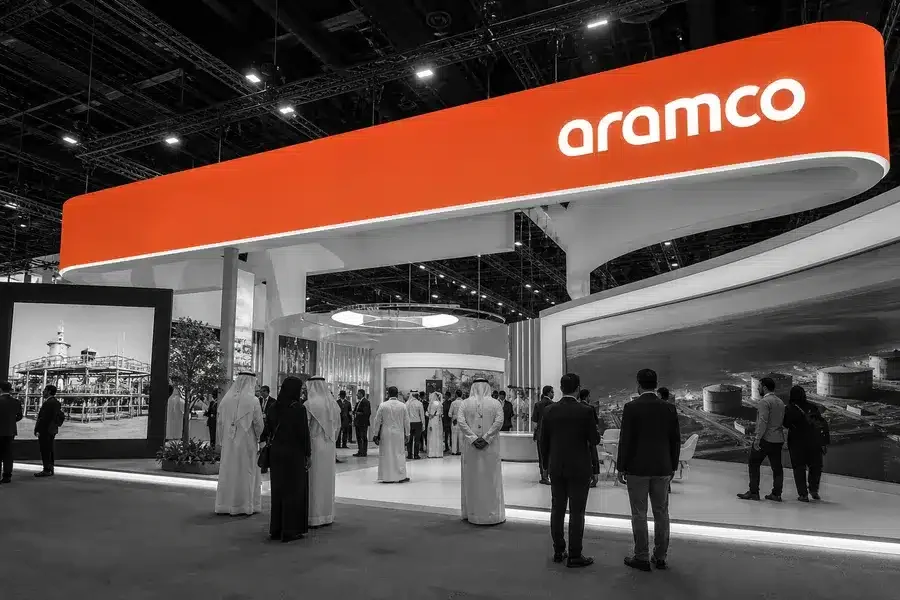
Saudi Aramco posted a 34.5% jump in third-quarter profit on November 3, 2026, a result that underscores the company’s capacity to generate durable cash flows even as global energy markets remain volatile.
For long-horizon investors, the scale of Aramco’s earnings rebound raises important questions about dividend sustainability, capital allocation priorities, and how the world’s largest oil producer stacks up against Western integrated majors navigating their own energy-transition pressures. 1
Key Takeaways
- Aramco Q3 profit rose 34.5% year-over-year.
- Result signals strong cash-flow durability for dividend-focused investors.
- Aramco outpaced most Western oil-major earnings growth this cycle.
Market Reaction & Context
The 34.5% profit increase positions Aramco well ahead of several Western peers in this earnings cycle, where integrated majors such as BP and Shell have reported more modest gains amid refining-margin headwinds and elevated operating costs. 1 For context, similar outsized quarterly earnings rebounds have appeared across capital-intensive sectors – TSMC’s recent record profit run driven by AI chip demand illustrates how dominant, low-cost producers can compound returns rapidly when macro conditions shift in their favour.
Aramco’s unmatched production cost base – among the lowest per-barrel globally – means the profit leverage on any oil-price recovery is structurally higher than most competitors can achieve. That asymmetric cost structure is the central reason long-horizon investors track Aramco’s earnings cadence closely.
Detailed Analysis
The 34.5% year-over-year improvement reflects a combination of firmer crude-oil prices relative to the year-earlier quarter and Aramco’s disciplined cost management, which allows a disproportionately large share of revenue gains to drop through to net income. 1 Unlike diversified Western producers that have been absorbing write-downs on renewable-energy bets, Aramco’s income statement remains tightly focused on upstream hydrocarbon production, limiting noise in the headline figure.
Dividend coverage is the metric long-term shareholders watch most closely, and a result of this magnitude suggests Aramco’s base and performance dividends remain well-supported without requiring incremental debt. Capital expenditure discipline has been a recurring theme in Aramco’s recent communications, with management signalling continued investment in capacity maintenance rather than aggressive expansion, a posture that conserves free cash flow.
Macro tailwinds from OPEC+ supply management have provided a supportive price floor throughout the period, though any loosening of those production constraints in coming quarters could test earnings momentum. Investors assessing multi-year return prospects should weigh that policy dependency against the underlying low-cost production advantage.
Outlook & Management Quote
While the primary source did not include a detailed management quotation in the accessible content, Aramco’s leadership has consistently framed the company’s earnings power as a function of operational excellence and reserve depth rather than short-term price cycles. 1 Analysts have noted that a result of this scale reinforces confidence that Aramco can sustain its tiered dividend structure – a key pillar of the investment case for income-oriented shareholders.
Looking at comparable earnings momentum across sectors, Capital One’s 11% profit jump driven by its Discover merger integration and GM’s Q3 profit surge alongside a 2027 guidance upgrade both illustrate how dominant, low-cost operators in their respective industries are rewarding long-horizon investors in the current cycle – a pattern Aramco’s results reinforce in the energy sector.
Conclusion
A 34.5% quarterly profit increase from the world’s largest oil producer is a data point that carries weight well beyond a single earnings season. For investors focused on durable cash generation and dividend reliability, Aramco’s result offers evidence that its structural cost advantages translate into earnings resilience across commodity-price cycles.
The central risk to monitor remains OPEC+ policy cohesion and the trajectory of global oil demand as energy-transition timelines evolve – factors that will ultimately determine whether Q3 2026 marks a sustained inflection or a cyclical peak.
Not investment advice. For informational purposes only.
References
1(2026-11-03). “Aramco posts 34.5% rise in third-quarter profit”. Reuters. Retrieved 2026-11-03.