

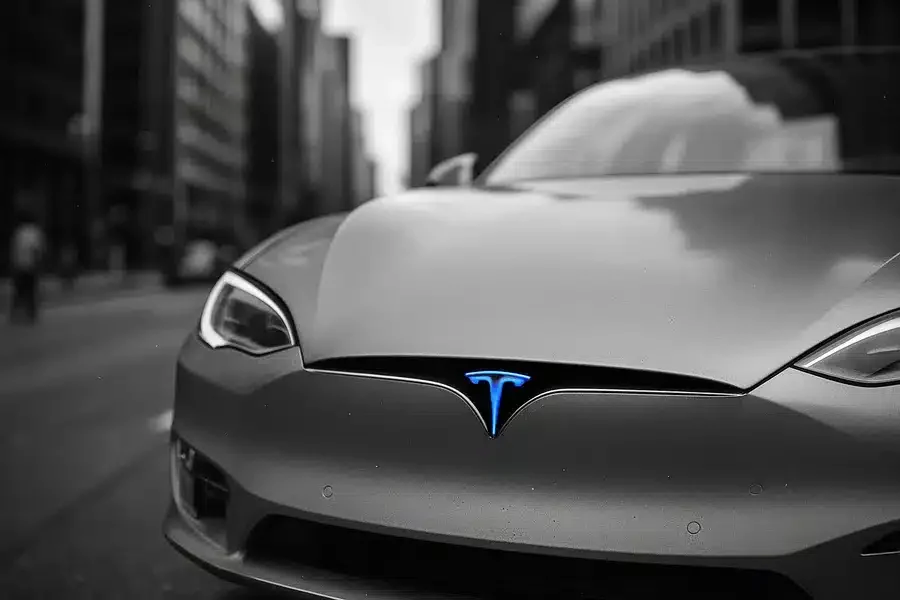
Tesla Inc. (TSLA) initiated its autonomous taxi operations in Dallas and Houston on Saturday, representing the company’s first geographic expansion beyond its existing Austin and San Francisco Bay Area services. This development positions Tesla as a direct challenger to Alphabet’s Waymo, which introduced fully autonomous operations in both Texas metropolitan areas in February.
Key Takeaways
- Tesla launches robotaxi in two new Texas cities
- Service areas limited to small geofenced zones initially
- Expansion comes ahead of Q1 earnings report
Market reaction & context
Tesla equity gained 14.8% to reach $400.62 during the previous week, climbing above critical moving averages as market participants anticipated autonomous vehicle progress 1. The shares currently operate within a four-month consolidation framework featuring a potential breakout level at $498.83.
This expansion creates direct competition with Waymo, which maintains roughly 2,500 operational robotaxis providing more than 500,000 paid trips weekly across 10 U.S. metropolitan areas 2. Waymo’s Texas deployments feature completely driverless vehicles without safety monitors or remote oversight requirements.
Service details and limitations
Tesla’s Houston deployment spans roughly 25 square miles focusing on Jersey Village and Willowbrook neighborhoods in the northwest metro area. The Dallas operational zone includes Highland Park, select downtown sections, and Uptown districts.
Each service territory constitutes a small portion of Tesla’s Austin implementation, which grew to 245 square miles following nearly twelve months of incremental expansion from its original 20-square-mile boundary 3. Tesla has not revealed fleet quantities, fare structures, or supervision protocols for these new markets.
Expansion timeline and commitments
These deployments satisfy portions of Tesla’s ambitious seven-city growth strategy detailed in its Q4 2025 shareholder communication, which pledged robotaxi launches in Dallas, Houston, Phoenix, Miami, Orlando, Tampa and Las Vegas during the first half of 2026. CEO Elon Musk characterized the schedule as aggressive during the subsequent earnings discussion.
Tesla documented achieving approximately 700,000 paid robotaxi trips across Austin and Bay Area implementations through late January 2026 4. The organization operates merely a limited number of unsupervised vehicles in Austin, while most of its roughly 80-vehicle fleet continues requiring safety monitors.
Safety record and regulatory challenges
Tesla’s growth occurs alongside persistent safety questions, with the company documenting 15 collision incidents to federal authorities since Austin operations commenced 5. Independent evaluation indicates crash frequencies roughly four to nine times higher than human drivers, varying by comparison methodology.
The platform encounters operational restrictions, including weather-related suspensions during precipitation – a notable limitation for Houston, which experiences over 100 rainy days per year. Tesla redacts all incident descriptions as “confidential business information” in regulatory documents, contrasting with competitors who supply complete accident details.
Management outlook
Musk demonstrated enthusiasm regarding the expansion, sharing on social media platform X: “Try Tesla Robotaxi in Dallas & Houston!” 6 The scheduling enables the company to showcase tangible advancement during Wednesday’s Q1 2026 earnings discussion, where analysts anticipate comprehensive updates on fleet dimensions and supervision arrangements.
Tesla intends to commence volume manufacturing of its specialized Cybercab autonomous vehicle during late 2026 at its Texas manufacturing facility, marking the subsequent phase of robotaxi network expansion beyond current Model Y-based activities.
Industry competition
The autonomous transportation sector has experienced increased activity recently, with Waymo scaling rapidly throughout major U.S. metropolitan areas and Amazon’s Zoox accelerating development schedules. Tesla’s $1.3 trillion market capitalization depends substantially on successful autonomous vehicle implementation, as CEO Musk has shifted corporate emphasis from conventional electric vehicles to artificial intelligence and robotics applications.
Tesla’s methodology differs from rivals by utilizing camera-based technologies instead of costly LiDAR equipment, though this approach has encountered criticism regarding safety performance and regulatory clearance procedures.
Not investment advice. For informational purposes only.
References
1Ed Carson (April 18, 2026). “Tesla Robotaxi Service Expands To Dallas And Houston”. Investor’s Business Daily. Retrieved April 19, 2026.
2Cláudio Afonso (April 18, 2026). “Tesla Launches Unsupervised Robotaxi in Dallas and Houston”. EV. Retrieved April 19, 2026.
3Fred Lambert (April 18, 2026). “Tesla launches ‘Robotaxi’ in Houston and Dallas with tiny geofences”. Electrek. Retrieved April 19, 2026.
4Reuters (April 18, 2026). “Tesla expands robotaxi service to Dallas, Houston”. Reuters. Retrieved April 19, 2026.
5Anthony Ha (April 18, 2026). “Tesla brings its robotaxi service to Dallas and Houston”. TechCrunch. Retrieved April 19, 2026.
6Channel NewsAsia (April 19, 2026). “Tesla rolls out robotaxis in Dallas and Houston”. Channel NewsAsia. Retrieved April 19, 2026.