


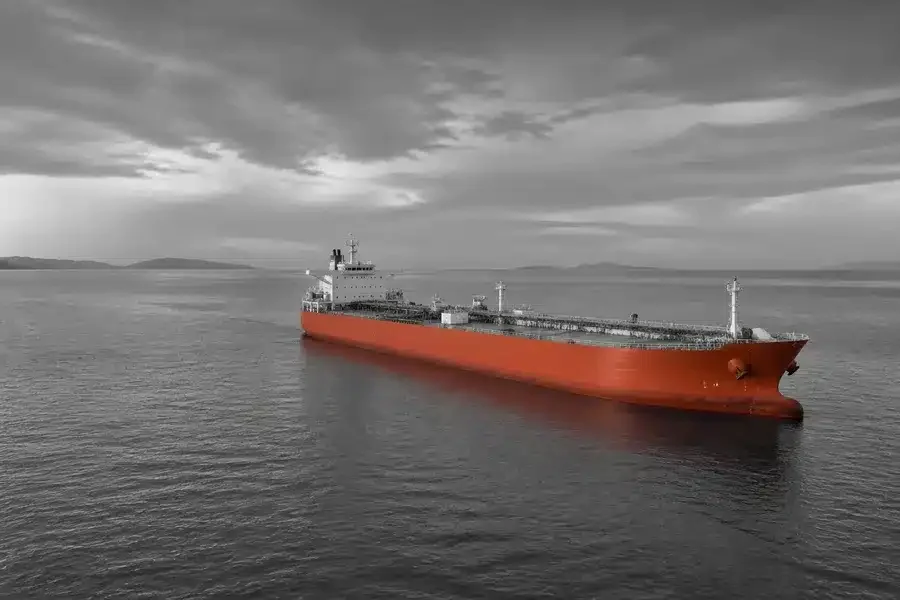
Gulf crude flows excluding Iran recovered to more than 81% of pre-war volumes in September, Kpler ship-tracking data showed, as Saudi Arabia’s export rebound offset a complete collapse in Iranian shipments under a U.S. naval blockade.
For long-horizon investors monitoring energy supply chains, the divergence between non-Iranian Gulf producers and Tehran signals a structural reshaping of global crude flow routes that could persist well beyond any near-term diplomatic resolution.
Key Takeaways
- Gulf oil flows ex-Iran averaged over 81% of pre-war levels in September.
- Iranian crude exports fell to zero amid an active U.S. blockade.
- Regional flows briefly exceeded pre-war levels on four days in late September.
Market Context & Flow Benchmarks
Before the U.S.-Israel war on Iran began, Middle East crude exports averaged 18 million barrels per day (bpd) between March 2025 and February 2026, according to Kpler data 1. On four days between September 24 and September 29, regional exports surpassed that pre-war baseline, briefly touching 19.5-22.5 million bpd – a notable recovery compared with the near-collapse in flows that followed the conflict’s outbreak 2.
The seven-day moving average for crude exports stood at 18.5 million bpd as of October 1, and total liquids including products and chemicals averaged 22.4 million bpd for the week ending September 30. Liquefied natural gas cargoes exiting the Strait of Hormuz also rose to their highest monthly level since February 2.
Investors tracking regional energy exposure – including those watching upstream operators like offshore oil ventures in emerging basins – may find these throughput metrics useful as a proxy for global spare supply availability.
Detailed Analysis: Two-Speed Gulf
The September data reveals a sharply bifurcated Gulf energy landscape. Saudi Arabia led the non-Iranian recovery, rebuilding export capacity despite continued infrastructure attacks on the kingdom’s oil facilities 1. Iranian exports, by contrast, fell to zero as a U.S. naval blockade effectively severed Tehran’s crude sales to international markets.
This mirrors a broader pattern in which escalating Iran sanctions have amplified crude price tensions and redirected global supply chains. The Kpler figures exclude vessels that disabled their AIS transponders to evade detection, meaning actual Iranian volumes may be marginally higher – though the scale of the blockade suggests the gap is limited.
Iran’s ability to harass regional shipping has not, however, completely choked non-Iranian flows. The United Kingdom Maritime Trade Operations agency reported at least one attack per day in the Strait of Hormuz or the Gulf of Aden since October 2, yet Saudi and other Gulf Arab exports continued to move 2. Earlier Houthi strikes on Saudi Aramco infrastructure had raised fears of a more severe supply shock, fears that September data suggests have not fully materialised.
Geopolitical Overhang: Hormuz Conditions
The Strait of Hormuz remains a pressure point. Iran’s parliament speaker Mohammad Bagher Ghalibaf said the waterway would remain closed until the United States accepts Tehran’s seven-point plan to reopen it, signalling that the diplomatic path to normalisation is narrow 2. Senior Islamic Revolutionary Guard Corps commander Ali Fadavi disputed the significance of current flow volumes, saying in a televised interview that only three to four million bpd are now moving through the U.S.-supervised corridor.
“Only three to four million barrels of oil per day are now moving through the route,” Fadavi said, dismissing the amount as “negligible” when compared with pre-war traffic 2.
Fadavi also claimed, for the first time, that no U.S. vessels were present in the Gulf, the Strait of Hormuz, the Sea of Oman or the northern Indian Ocean, and that U.S. warships are “100 percent vulnerable” to IRGC attacks – assertions that, if accurate, would have significant implications for the durability of the current blockade on Iran 2. Investors following the broader market impact of Iran tensions should weigh these claims against continued evidence of Saudi export recovery.
Outlook for Supply Chain Durability
The September rebound in non-Iranian Gulf flows offers cautious encouragement for energy markets, but the supply chain remains fragile. Daily attacks on Hormuz shipping, Iran’s refusal to reopen the strait without diplomatic concessions, and continued uncertainty around Saudi infrastructure resilience all represent ongoing risks to the 81% recovery rate sustaining or improving 1.
For long-horizon investors, the key variable is whether Saudi Arabia and its Gulf Arab peers can maintain or expand export capacity if Iranian interdiction of shipping escalates further. A return to the pre-war 18 million bpd average on a sustained basis – rather than the spike days seen in late September – would represent a more meaningful supply-side signal 2. Separately, the risk of further Houthi port seizures adds an additional layer of uncertainty to Red Sea routing alternatives.
Conclusion
Gulf oil flows ex-Iran clawing back to 81% of pre-war levels in September is a meaningful data point for energy investors, reflecting Saudi export resilience in the face of infrastructure attacks and hostile shipping conditions. The complete elimination of Iranian exports, however, represents a permanent supply hole that non-OPEC producers and other Gulf members will need to fill if pre-war throughput baselines are to be reliably restored. The diplomatic and military variables in play suggest volatility in these metrics is more likely than a smooth upward trajectory.
Not investment advice. For informational purposes only.
References
1(2026-10-05). “Gulf oil flows rise to average 81% of pre-war rate in September, data shows”. Reuters. Retrieved October 6, 2026.
2(2026-10-05). “Middle East oil exports surpass pre-war levels despite tensions, data shows”. Al Jazeera. Retrieved October 6, 2026.