

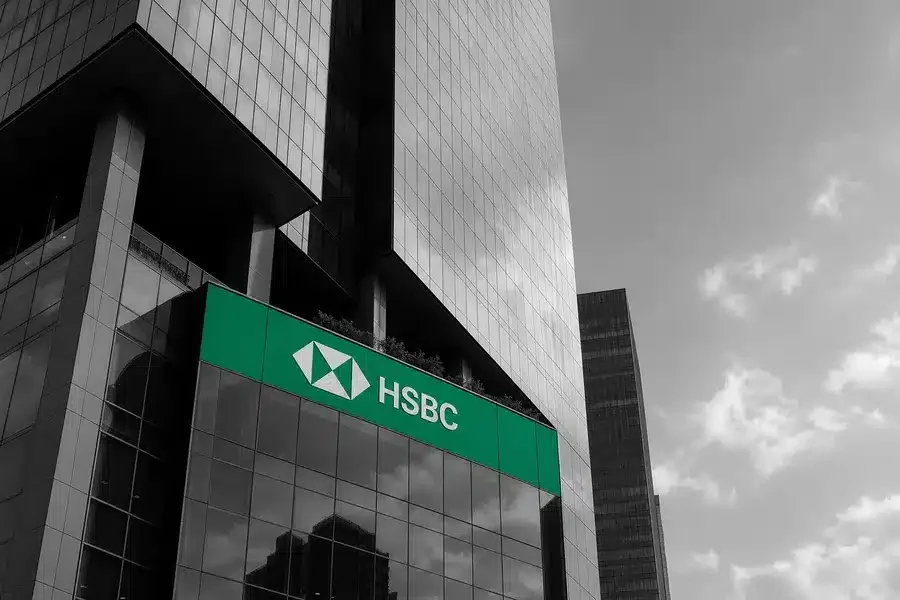
HSBC (HSBA.L / 0005.HK) agreed to sell its Singapore life and health insurance business to Germany’s Allianz (ALVG.DE) for S$2.7 billion ($2.09 billion), a divestment that will add up to 15 basis points to the bank’s core capital ratio and sharpen its focus on Asian wealth management.
For long-horizon shareholders, the deal crystallises a meaningful capital buffer while preserving fee-linked insurance revenue through a 15-year bancassurance agreement – a structure that keeps income flowing without the capital drag of owning the underwriting book.
Key Takeaways
- Deal values HSBC Life Singapore at S$2.7 billion ($2.09 billion).
- HSBC books an expected $1.8 billion pre-tax gain on the sale.
- A 15-year bancassurance pact keeps insurance distribution intact.
Market Reaction & Context
The transaction follows a broader pattern of global banks pruning sub-scale insurance manufacturing units in Asia even as they compete aggressively for affluent clients in the region. 1 HSBC paid $529 million to acquire Axa’s Singapore insurance assets in 2022, meaning the implied return on that purchase – before operating income – runs well into the hundreds of percentage points in just four years.
Allianz, which has been actively redeploying capital across Asia, gains a rare foothold in one of the world’s most tightly regulated and affluent insurance markets. Long-term investors tracking the German insurer’s strategic direction may find context in Allianz’s recent pivot toward operational efficiency and technology-led growth, a posture this acquisition reinforces by adding a high-quality distribution asset rather than building from scratch.
Deal Structure & Capital Impact
HSBC will receive an upfront S$200 million payment from Allianz to secure the 15-year bancassurance distribution rights, softening the revenue transition for Singapore customers. The divestment is scheduled to close in early 2027, subject to regulatory approvals. 1
The expected $1.8 billion pre-tax gain will flow through HSBC’s income statement upon completion, and the common equity tier 1 (CET1) uplift of up to 15 basis points gives management additional firepower for buybacks, dividends, or redeployment into higher-return franchises. HSBC’s CET1 ratio stood at approximately 14.2% as of its most recent quarterly filing, leaving the bank well above minimum regulatory thresholds even before this transaction closes.
Strategic Logic: Asset-Light Insurance Model
HSBC CEO Georges Elhedery has made no secret of his intent to simplify Europe’s largest bank and redeploy capital toward businesses offering stronger returns. The Singapore sale is the latest data point in that playbook, following the May 2026 agreement under which OCBC’s Indonesian unit agreed to acquire HSBC’s wealth and premier banking portfolio in Indonesia. 1
The bancassurance model HSBC is migrating to – selling third-party insurance products for a distribution fee rather than manufacturing policies on balance sheet – is capital-light and increasingly favoured by global banks seeking to maintain insurance revenue without the actuarial risk. HSBC’s insurance income rose 16% year-on-year in the first quarter of 2026, helping drive an 18% increase in quarterly wealth revenue, suggesting the underlying distribution engine remains robust regardless of who owns the manufacturing entity. 1
Management View
“This transaction reinforces our confidence in Singapore… HSBC Life Singapore has built a fast-growing business that is trusted by customers and partners, underpinned by deep local expertise,” said Anusha Thavarajah, Regional CEO of Allianz Asia Pacific. 1
The comment underscores Allianz’s conviction that Singapore’s high-net-worth demographic and stable regulatory environment justify a premium entry price. For HSBC investors, the bank’s willingness to sell a growing unit signals that capital efficiency, not top-line scale, is the dominant metric under Elhedery’s restructuring programme.
Conclusion
The HSBC-Allianz deal is a textbook capital-recycling transaction: HSBC locks in a material one-time gain and a CET1 boost while retaining the revenue economics of insurance distribution; Allianz acquires a proven Singapore platform with an exclusive, long-dated distribution channel. Long-horizon investors in either stock should weigh the deal’s closing timeline – early 2027 – and watch for any guidance updates at HSBC’s next results call on how the freed capital will be allocated. HSBC is also reviewing its retail operations in Turkey, Australia and Egypt, suggesting further portfolio reshaping is likely. 1
Not investment advice. For informational purposes only.
References
1Reuters (July 24, 2026). “HSBC sells Singapore insurance unit to Germany’s Allianz in $2.09 billion deal”. Reuters. Retrieved July 24, 2026.
2Selena Li, Sneha Kumar and Yantoultra Ngui (July 24, 2026). “HSBC sells Singapore insurance unit to Allianz in $2.1 billion deal”. Euronext / Reuters. Retrieved July 24, 2026.
3“HSBC to Sell Singapore Insurance Business to Allianz for $2.1 Billion”. The Wall Street Journal. Retrieved July 24, 2026.