

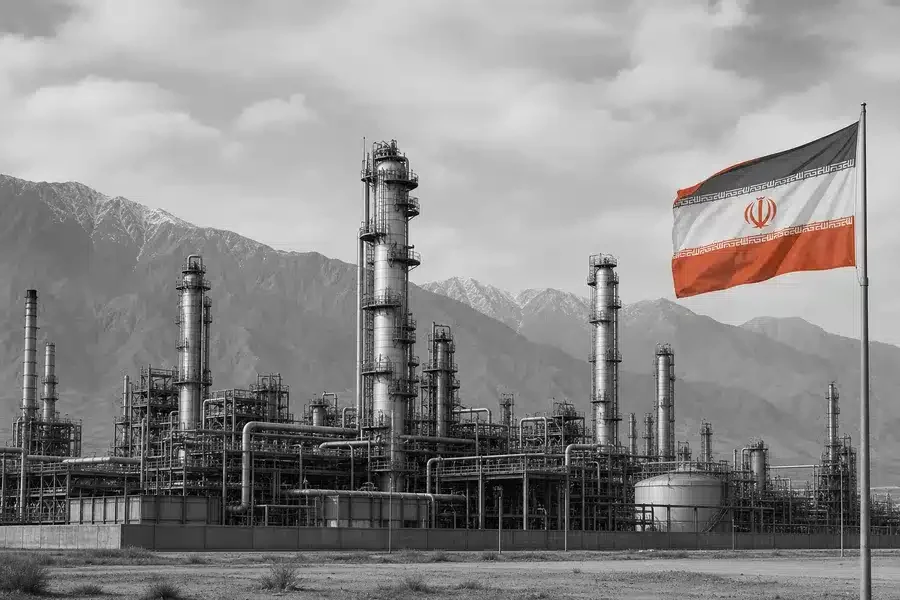
The U.S. Treasury revoked its 60-day general license authorizing Iranian oil sales on Monday, July 7, closing a brief sanctions window that had briefly pushed crude prices to their lowest levels since before the February 2026 conflict began.
For long-horizon energy investors, the revocation resets the supply calculus around Iranian barrels – roughly 1.5-2 million barrels per day that had been expected to flow more freely under the temporary authorization – and raises fresh questions about whether a durable nuclear deal can underpin any lasting market rebalancing.
Key Takeaways
- U.S. revokes 60-day Iran oil license amid tanker attack escalation.
- Crude prices had fallen to post-conflict lows under the waiver.
- IAEA inspection commitments and Hormuz transit remain in flux.
Market Reaction & Context
Oil prices had already swung sharply across the life of the short-lived waiver. Brent crude fell to its lowest point since before the U.S.-Israeli strikes on Iran on February 28, 2026, once Treasury Secretary Scott Bessent issued OFAC General License X on June 22 – a 60-day authorization covering Iranian crude, petroleum products, and petrochemicals through August 21.1
That price decline stood in stark contrast to the double-digit surge that accompanied Tehran’s earlier blockade of the Strait of Hormuz, a chokepoint through which roughly 20% of global seaborne crude flows. Investors tracking the ongoing U.S.-Iran diplomatic process had priced in the possibility of a more durable deal; the revocation now undermines that narrative.
Background: The Sanctions Flip and Its Limits
The original license was issued as part of a memorandum of understanding signed the week of June 17, 2026, under which Washington agreed to ease oil export restrictions in exchange for Tehran’s commitments to permit International Atomic Energy Agency inspections and guarantee free transit through the Strait of Hormuz.2
The authorization was sweeping in scope: it permitted dollar-denominated payments and covered associated banking, insurance, and shipping transactions – while carving out Cuba, North Korea, and Crimea.3 Independent Chinese refiners, previously the dominant buyers of discounted Iranian crude, stood to see their price advantage erode as Western buyers re-entered the market.
Treasury Secretary Bessent said on June 22 that Iran had committed to “free and open transit in the Strait of Hormuz and to permit International Atomic Energy Agency inspectors into their country” as part of the framework.1 Mediators also said Washington and Tehran had made “encouraging progress” at the first round of final-deal talks held in Switzerland that same day.
Why the Revocation Matters for Long-Term Investors
The revocation signals that the diplomatic framework underpinning the sanctions relief remains fragile. Gulf OPEC producers had already begun boosting output in anticipation of competing Iranian barrels; any sustained re-tightening could benefit those producers’ fiscal balances and their state-linked equity vehicles.
For integrated oil majors with Middle East exposure, the reversal also complicates long-range supply agreements that traders had begun structuring around the 60-day window. Iran holds the world’s third-largest proven crude reserves, and a genuine sanctions-removal scenario would represent a structural oversupply event – one that now appears deferred rather than cancelled.4
Outlook
Peace talks in Switzerland are reported to be continuing, and the underlying memorandum of understanding – which extended a ceasefire by at least 60 days from mid-June – formally remains in place. Whether tanker attack allegations will derail negotiations or prompt a new round of escalation is the central variable that energy traders are now pricing.
The Economist noted that the original sanctions waiver represented “a huge concession by America,” arguing that Iran stood to earn billions while making minimal concessions on core nuclear or regional security issues.4 That framing may complicate domestic U.S. political support for any renewed relief even if talks stabilize.
Conclusion
The revocation of the Iran oil sales authorization removes a near-term bearish supply catalyst from crude markets and re-introduces geopolitical risk premium. Long-horizon investors should monitor whether Switzerland talks produce a binding nuclear framework before August 21 – the original license expiry date – as that deadline now functions as a de facto diplomatic clock for the next round of sanctions decisions.
Not investment advice. For informational purposes only.
References
1Psaledakis, Daphne; Jackson, Katharine; Heavey, Susan (June 22, 2026). “US authorizes Iranian oil sales amid talks on final peace deal”. Reuters. Retrieved July 7, 2026.
2(June 23, 2026). “U.S. temporarily lifts oil sanctions on Iran for first time in years”. ABC World News Tonight with David Muir via Facebook. Retrieved July 7, 2026.
3(June 22, 2026). “NEWS: The Trump administration has issued a 60-day waiver suspending U.S. sanctions on Iranian crude oil…”. MeidasTouch via Facebook. Retrieved July 7, 2026.
4(June 23, 2026). “Waiving sanctions on Iranian oil is a huge concession by America”. The Economist. Retrieved July 7, 2026.