


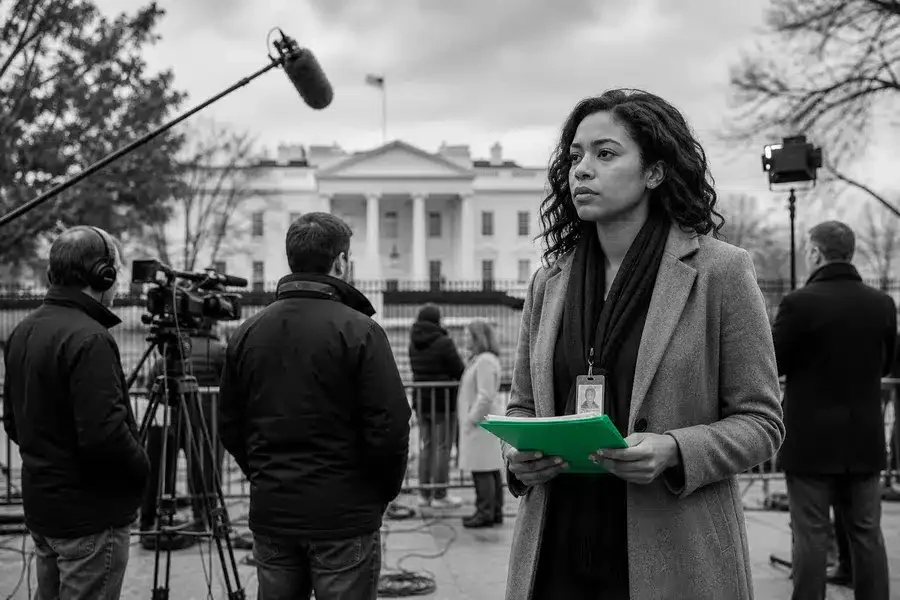
CNN, MS NOW and Politico filed for a preliminary injunction Monday to preserve their White House access beyond an October 8 deadline, escalating a constitutional clash that adds regulatory and reputational uncertainty to media-sector equities.
The outcome could set a durable legal precedent governing government-media relations, making it a watchpoint for investors in broadcast and digital-news companies whose valuations partly hinge on editorial independence and advertiser confidence.
Key Takeaways
- Current court block on White House ban expires October 8.
- Outlets allege ban is viewpoint discrimination, violating First Amendment.
- Justice Department argues ban is lawful on national-security grounds.
Regulatory Context & Market Backdrop
The dispute centres on U.S. District Judge Timothy Kelly’s 14-day temporary restraining order, issued September 24, which required the White House to restore press-badge access for journalists at CNN (a unit of Warner Bros. Discovery), MS NOW and Politico 1. Warner Bros. Discovery and Politico parent Axel Springer are among the media names whose governance and regulatory exposure investors in the sector routinely track.
The case is unfolding against a broader backdrop of elevated government-media tension: President Donald Trump has personally sued the New York Times (NYT.N), the Wall Street Journal and the BBC for alleged defamation during his second term, compounding sector-wide headline risk 1.
The Legal Dispute in Detail
Trump announced the ban on September 18 via social media, accusing the three outlets of reporting “FAKE NEWS” and saying they “shouldn’t be able to constantly write or report FICTION and LIES” 1. The Justice Department subsequently argued the ban was lawful because the outlets’ coverage had allegedly revealed classified information, threatening national security.
Judge Kelly initially rejected that framing, finding the bans likely violated the outlets’ right to fair legal treatment under the Constitution’s due process clause 2. In Monday’s filing, the media companies argued the administration has been “unpredictably and inconsistently” enforcing the ban even during the temporary restraining order period – pointing specifically to CNN being barred from Air Force One during Trump’s weekend trip to Tennessee 1.
First Amendment Argument and Administration Response
The outlets’ legal team pushed Judge Kelly to adopt a broader rationale, emphasising First Amendment protections alongside due process claims. Attorney Theodore J. Boutrous Jr., representing the news organisations, said it was “critical to ensure that the White House continues to be prevented from implementing this unconstitutional ban” as the temporary order nears expiry 3.
The organisations argued in their filing that Trump and senior officials, including Attorney General Todd Blanche, had repeatedly cited negative coverage – not national security – as the true motive, undermining the Justice Department’s legal defence 2. Blanche described the national security risk as stemming from “one-sided media coverage,” a characterisation the outlets said exposed the government’s actual intent.
Timeline and Next Steps
The Trump administration has until Friday, October 3, to respond to Monday’s filing; the outlets are then due to submit a final brief by the following Monday 2. Judge Kelly said he plans to schedule a hearing and rule “expeditiously,” meaning a ruling on the preliminary injunction could land before the October 8 expiry 2.
A successful preliminary injunction would maintain the outlets’ access for the duration of the lawsuit and would also position the administration to pursue an appellate challenge, potentially carrying the First Amendment questions to a higher court – a scenario investors in news-dependent advertising businesses should monitor closely.
Investor Outlook
While the direct financial impact on any single ticker from a press-access ruling is difficult to quantify in the near term, the case carries longer-horizon implications. A ruling that broadly affirms government power to selectively exclude journalists could dampen editorial ambition at publicly listed media companies sensitive to advertiser perception and audience trust metrics.
Conversely, a robust First Amendment injunction would reinforce the legal operating environment for independent journalism – a factor some institutional investors increasingly weigh under governance and social frameworks when assessing media-sector holdings.
Not investment advice. For informational purposes only.
References
1Reuters (September 29, 2026). “CNN, MS NOW, Politico ask judge to extend block on White House ban”. Reuters. Retrieved September 29, 2026.
2Tierney Sneed (September 29, 2026). “CNN, MS NOW and Politico ask judge to stop Trump from reviving White House ban”. CNN Politics. Retrieved September 29, 2026.
3Victoria Craw (September 29, 2026). “CNN, MS NOW and Politico ask judge to extend block on Trump’s media ban”. The Washington Post. Retrieved September 29, 2026.