


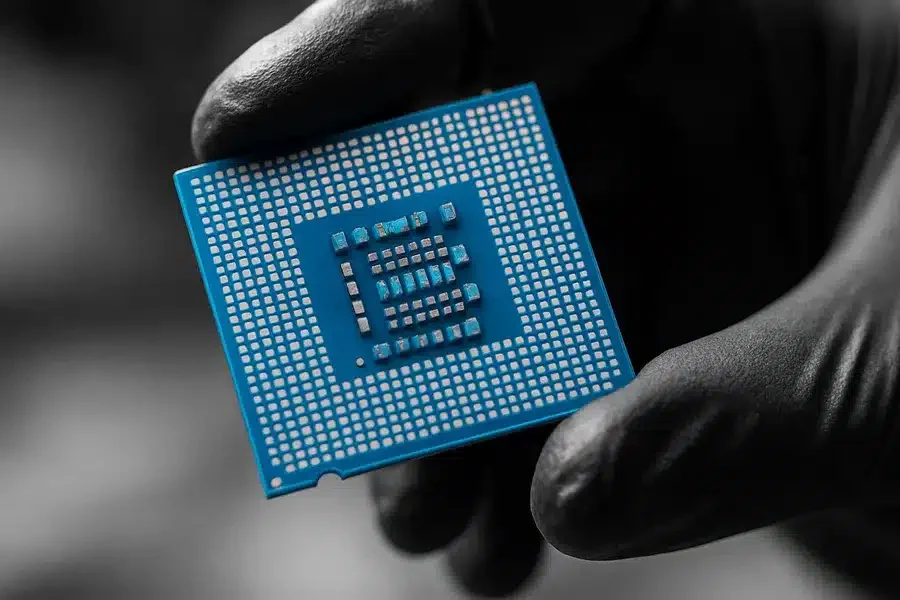
Nvidia (NVDA.O) has stopped production of chips intended for China, betting regulatory barriers will continue limiting sales to the world’s second-largest economy. The move reflects ongoing tensions over AI chip exports that could impact Nvidia’s revenue from a previously lucrative market.
Key Takeaways
- Nvidia halts China-focused chip production amid export controls
- H200 AI chip sales stalled by US security review
- TSMC capacity redirected from Chinese market orders
Production Shutdown Details
The chip giant has ceased manufacturing semiconductors specifically designed for Chinese customers, according to reports from the Financial Times 1. This strategic shift comes as both US and Chinese regulatory barriers create uncertainty around future sales to the region.
Nvidia’s H200 AI chip sales to China remain in limbo nearly two months after President Donald Trump initially approved exports, pending a US national security review 2. The State Department has reportedly pushed for closer scrutiny before approving export licenses.
TSMC Capacity Reallocation
Taiwan Semiconductor Manufacturing Company (TSMC), Nvidia’s primary chip manufacturer, has shifted production capacity previously allocated for Chinese orders to other customers 3. This reallocation reflects the semiconductor industry’s broader adaptation to evolving trade restrictions.
Chinese customers are not placing H200 chip orders with Nvidia until licensing clarity emerges, according to industry sources familiar with the discussions 2. The uncertainty has created a standoff between demand and regulatory approval processes.
Regulatory Environment Impact
The Commerce Department completed its analysis of Chinese chip exports, but inter-agency reviews continue to delay final approvals 2. These bureaucratic processes have effectively frozen a market segment that previously generated significant revenue for Nvidia.
Earlier restrictions forced Nvidia to develop China-specific chips like the H20, designed to comply with US export controls while serving Chinese AI companies 4. However, even these modified products face ongoing scrutiny.
Management Perspective
Nvidia CEO Jensen Huang said last week he “hopes China will allow the US technology giant to sell its powerful H200 artificial intelligence chip in the country and that the license is being finalized” 2. His comments suggest the company remains optimistic about eventual market access despite current obstacles.
“The licence is being finalized,” Huang said regarding H200 sales to China, indicating ongoing diplomatic and regulatory negotiations.
Market Context
China previously represented a substantial portion of Nvidia’s global revenue before export restrictions tightened. The production halt signals the company’s acknowledgment that regulatory barriers may persist longer than initially anticipated.
The semiconductor industry continues navigating complex geopolitical tensions that affect global supply chains and market access. Nvidia’s decision reflects broader strategic adjustments as technology companies adapt to evolving trade policies.
Not investment advice. For informational purposes only.
References
1“Nvidia AI chip sales to China stalled by US security review”. Financial Times. Retrieved March 5, 2026.
2Reuters (February 4, 2026). “Nvidia AI chip sales to China stalled by US security review, FT reports”. Reuters. Retrieved March 5, 2026.
3“Nvidia suppliers halt H200 output after China blocks chip shipments”. Financial Times. Retrieved March 5, 2026.
4Business Reporter Team (July 21, 2025). “Nvidia’s China restart faces production obstacles, The Information reports”. Business Reporter. Retrieved March 5, 2026.