


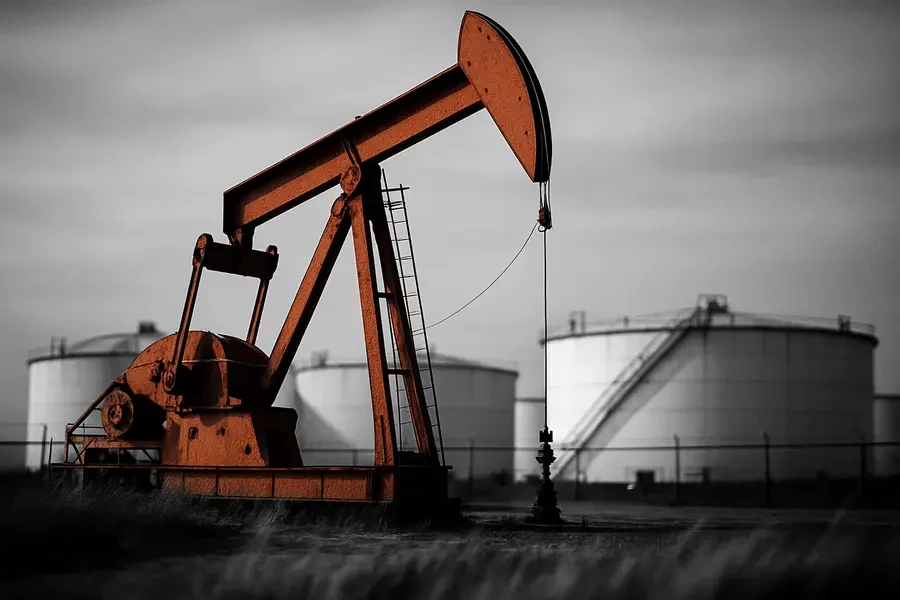
Dateline: NEW DELHI, August 12, 2025 – State-owned Oil India Ltd reported a sharp profit decline as falling crude oil prices pressured the energy producer’s quarterly results1.
The earnings drop highlights how upstream oil companies remain vulnerable to commodity price volatility, even as downstream refiners benefit from lower input costs.
- Oil India’s crude price realization fell 22% year-over-year
- Net profit dropped 23% in latest quarter reported
- Company selling crude at $66.20 per barrel average
Market Impact and Financial Performance
Oil India’s crude oil price realization dropped 22% compared to the previous year, reaching $66.20 per barrel1. The state-owned explorer reported a 23% decline in third-quarter net profit as commodity price weakness weighed on revenue3.
The profit decline mirrors broader challenges facing India’s upstream energy sector. Oil India’s struggles contrast with downstream refiners, which have benefited from lower crude input costs and maintained healthy refining margins4.
Quarterly Results Analysis
The company’s most recent fourth-quarter results showed continued pressure, with net profit falling 21% for the January-March period of fiscal year 20255. On a consolidated basis, Oil India reported an even steeper 36% decline in net profit to approximately ₹1,497 crore ($180 million) in Q4 FY256.
Despite the earnings headwinds, Oil India achieved record output levels in FY25 while increasing capital expenditure investments5. The production gains helped partially offset the impact of lower commodity prices on overall revenue.
Industry Context and Outlook
Oil India’s performance reflects broader volatility in global energy markets, where crude prices have fluctuated dramatically since 20148. While producers face margin pressure, Indian consumers have not seen corresponding relief at fuel pumps, with petrol prices remaining elevated across major cities7.
State-owned oil marketing companies have maintained significant profitability despite consumer price pressures. The Ministry of Petroleum and Natural Gas confirmed combined profits of ₹86,000 crore for state-owned oil marketing companies, representing a 25-fold increase4.
Investment Implications
The earnings volatility at Oil India underscores the cyclical nature of upstream energy investments. Investors in the sector must weigh production growth potential against commodity price risk exposure.
For retail investors, Oil India’s results highlight how state-owned energy companies remain sensitive to global crude price movements despite India’s growing domestic energy demand.
Not investment advice. For informational purposes only.
References
1 Reuters (August 12, 2025). “State-run Oil India’s profit drops as fuel prices tank”. Reuters. Retrieved August 12, 2025.
2 Reuters (August 12, 2025). “India’s soyoil imports set for record high, palm oil at five-year low”. Reuters. Retrieved August 12, 2025.
3 Outlook Business (February 8, 2025). “Oil India Limited Net Profit Drops 23% on Lower Oil Prices”. Outlook Business. Retrieved August 12, 2025.
4 Economic Times (September 30, 2024). “Oil companies making Rs 15/ltr profit on petrol even as consumers await price cuts”. Economic Times. Retrieved August 12, 2025.
5 Times of India (May 21, 2025). “Oil India Q4 net profit drops 21% on lower crude prices”. Times of India. Retrieved August 12, 2025.
6 Hindu Business Line (May 22, 2025). “Oil India’s profit drops 36% due to low oil prices”. LinkedIn. Retrieved August 12, 2025.
7 NDTV Profit (June 20, 2025). “Petrol, Diesel Prices Extend Decline In Chennai On June 20”. NDTV Profit. Retrieved August 12, 2025.
8 YouTube (April 29, 2025). “In Public Interest: The Truth Behind India’s Sky-High Fuel Prices”. YouTube. Retrieved August 12, 2025.
9 PTI News (February 8, 2025). “Oil India net profit drops 23 pc on lower oil prices”. PTI News. Retrieved August 12, 2025.
10 Energy News (July 31, 2025). “Coal India’s profit drops due to weak power demand”. Energy News. Retrieved August 12, 2025.