


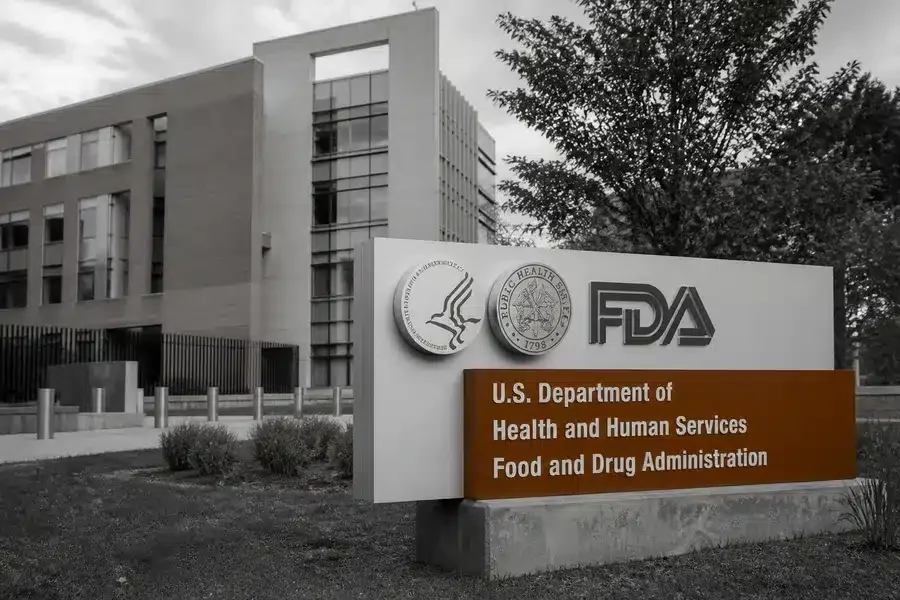
Ionis Pharmaceuticals (IONS.O) secured FDA approval Thursday for zilganersen (Zanvastro), the first-ever authorized treatment for Alexander disease, a move analysts say could anchor a durable rare-disease revenue stream worth up to $295 million annually at peak.1
For long-horizon investors tracking pipeline durability, the approval marks Ionis’s transition from a platform-stage antisense oligonucleotide company toward a self-commercializing rare-neurological franchise – a structural revenue shift with meaningful margin implications.
Key Takeaways
- Zanvastro is the first FDA-approved therapy targeting Alexander disease’s root cause.
- William Blair projects peak annual sales of $295 million for the drug.
- Fewer than 1,000 U.S. patients qualify, underlining rare-disease pricing leverage.
Pipeline Context & Market Position
The approval lands Ionis squarely in the rare-CNS (central nervous system) therapeutics space alongside larger peers that have built orphan-drug portfolios commanding premium pricing. Alexander disease affects fewer than 1,000 people in the United States, according to the National Institutes of Health – a patient population small enough that analysts typically model high per-patient revenue to underpin total sales projections.1
The rare-disease FDA approval wave in neurology has intensified over the past 18 months, with regulators greenlighting first-in-class treatments across multiple previously untreatable genetic disorders. Investors tracking pharma pipeline durability have increasingly rewarded companies that convert platform technologies – such as Ionis’s antisense approach – into commercially viable, proprietary products rather than royalty-dependent partnerships. For a comparison of how pipeline halts can reshape revenue expectations in the same space, the Regenxbio RGX-121 setback illustrates the downside risk that Ionis has now sidestepped with this approval.
How Zanvastro Works
Zanvastro targets the molecular root of Alexander disease by suppressing production of GFAP, a protein that accumulates abnormally in the brain due to a specific genetic mutation and progressively damages white matter.1 The drug is delivered via intrathecal injection – directly into the spinal canal – every three months by a trained healthcare professional, a administration profile that limits self-dosing but supports a specialty-channel distribution model with predictable revenue cadence.
The drug covers both adults and pediatric patients, broadening the addressable population within the already narrow patient pool. In a combined early-to-late-stage clinical study, patients receiving a 50 mg dose showed statistically significant improvement in gait speed on a 10-meter walk test at 61 weeks – the pivotal efficacy read-out underpinning the FDA submission.1
Regulatory Validation & Management Quote
The FDA’s neurology division framed the approval in explicitly disease-modifying terms, distinguishing Zanvastro from symptomatic treatments.
“Today’s approval is a landmark moment for this community, offering the first therapy that addresses the underlying cause of this rare and serious disease,” said Emily Freilich, director of the FDA’s neurology division covering rare genetic and neuromuscular diseases.1
Ionis did not respond to requests for comment on pricing details before publication, leaving per-patient cost – a critical variable for revenue modeling – unconfirmed. In the orphan-drug segment, annual list prices routinely exceed $200,000 per patient, and with a sub-1,000 U.S. patient base, list pricing will be central to whether Zanvastro reaches William Blair’s $295 million peak-sales estimate.
Investor Outlook
The Zanvastro launch represents a meaningful test of Ionis’s commercial infrastructure, as the company has historically relied on partners such as AstraZeneca and Biogen to manage late-stage commercialization. A successful self-launch would validate a higher-margin, direct-revenue model and reduce the royalty drag that has historically compressed Ionis’s net revenue per approved asset.
Investors should also watch for launch-quarter prescription data and any managed-care coverage decisions, which in the ultra-rare segment can materially compress or expand realized revenue relative to analyst peak-sales models. Broader FDA activity in rare neurological disorders – including approvals recently tracked across the autoimmune and orphan space, such as the J&J Imaavy clearance – suggests regulators remain receptive to first-in-class neurological assets backed by biomarker-linked trial designs.
Conclusion
Thursday’s FDA clearance converts Ionis’s antisense platform into a commercially live rare-CNS asset with no approved competition and a clearly defined, if small, patient population. The $295 million peak-sales projection from William Blair is meaningful for a company of Ionis’s scale, particularly if per-patient pricing aligns with orphan-drug norms. Long-horizon investors will focus on three near-term signals: list price disclosure, payer coverage breadth, and quarterly new-patient starts as indicators of whether Zanvastro can reach the top end of analyst forecasts.
Not investment advice. For informational purposes only.
References
1Christy Santhosh (September 3, 2026). “Ionis Pharma’s drug becomes first FDA-approved treatment for rare brain disorder”. Reuters. Retrieved September 3, 2026.
2Thomson Reuters (September 3, 2026). “Ionis Pharma’s drug becomes first FDA-approved treatment for rare brain disorder”. WDEZ 101.9 FM. Retrieved September 3, 2026.