


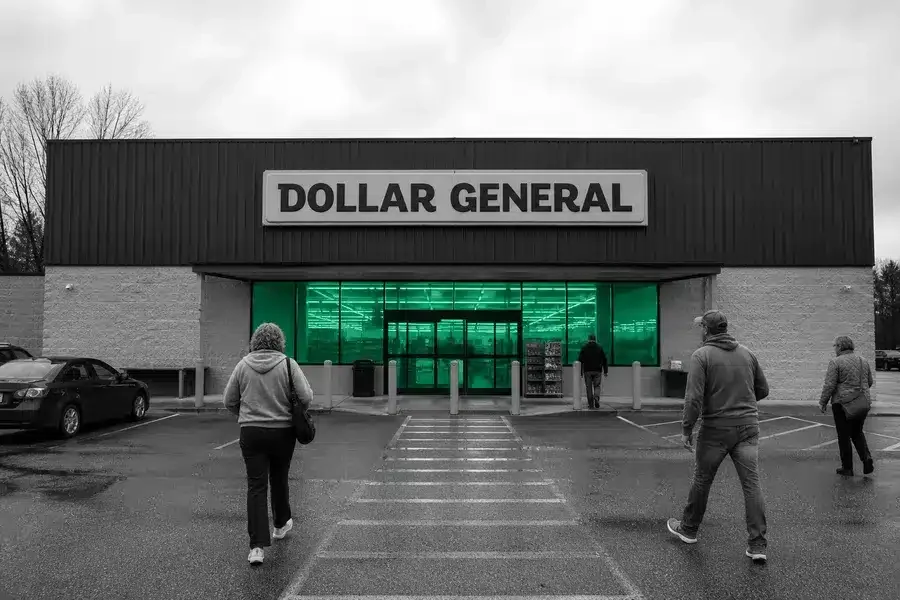
The Federal Trade Commission and 20 states sued Dollar General (DG) on Monday over alleged systematic overcharging of shoppers, sending shares down roughly 4% and raising fresh questions about compliance costs and litigation exposure for the discount retailer.
For long-horizon investors, the lawsuit introduces a material regulatory overhang at a moment when Dollar General has been positioning its store network as a go-to destination for cost-conscious consumers facing elevated food and energy prices.
Key Takeaways
- FTC and 20 states allege DG extracted millions via unlawful overcharges.
- Thousands of consumer complaints reportedly went unaddressed by the company.
- DG shares fell ~4% on the day the lawsuit was filed.
Market Reaction & Context
Dollar General stock fell approximately 4% after the FTC published its complaint on Monday – a notably sharper single-session move than the broader S&P 500 Retail Select Industry Index, which was little changed on the day 1. The selloff reflects investor concern that a multi-state enforcement action could translate into fines, mandatory remediation spending, and reputational damage with the budget-focused consumer base that drives the chain’s traffic.
Dollar General operates more than 19,000 stores, many in rural and lower-income communities, making price-accuracy violations particularly sensitive from both a regulatory and brand-equity standpoint. Peer discount chains have largely avoided similar federal pricing enforcement actions in recent years.
What the Complaint Alleges
The FTC’s complaint says thousands of Dollar General locations charged customers more at the register than prices displayed on shelves, price tags, and in advertisements 1. The agency said the company has extracted “millions of dollars in unlawful overcharges” while failing to put sufficient safeguards in place to prevent the practice.
Regulators further contend that Dollar General received “tens of thousands” of consumer complaints about the discrepancy between advertised and charged prices but did not implement adequate policies to correct the problem. That detail – a documented pattern of inaction – could weigh heavily in court and complicate any settlement negotiations.
Regulatory & Political Backdrop
The 20 states joining the FTC span a broad ideological range, including Alabama, California, Florida, Texas-neighboring Oklahoma, and Wisconsin, signalling cross-partisan appetite for consumer-price enforcement ahead of next week’s midterm elections 1. Officials across the political spectrum have made combating perceived retail price abuses a campaign theme as households contend with elevated grocery and fuel costs.
That political dynamic suggests the litigation is unlikely to be quietly resolved before it receives sustained public attention, adding to execution risk for Dollar General management.
Regulatory Statement & Company Response
“Dollar General has betrayed the trust of millions of American consumers and imposed significant financial harm on communities and consumers who are already struggling to make their paychecks last,” said Christopher Mufarrige, director of the FTC’s Bureau of Consumer Protection 1.
Dollar General did not immediately respond to a request for comment at the time of publication. The absence of an early rebuttal leaves investors without clarity on the company’s legal strategy or any remediation plans that could help quantify potential financial exposure.
Outlook for Long-Term Investors
The core risk for patient shareholders is not the headline fine – which may ultimately prove manageable relative to the company’s revenue base – but the operational cost of bringing pricing systems into compliance across a store footprint of this scale. Installing updated point-of-sale safeguards, retraining staff, and absorbing ongoing legal fees could pressure selling, general, and administrative expenses for multiple quarters.
If courts require Dollar General to refund overcharged amounts to consumers, the liability pool tied to “millions of dollars” in alleged overcharges and “tens of thousands” of complaints could widen materially through discovery. Investors should watch for updates on the litigation timeline and any guidance revision when Dollar General next reports earnings.
Not investment advice. For informational purposes only.
References
1Roth, Maggie (2026-10-26). “FTC and 20 states sue Dollar General, alleging retailer overcharged shoppers”. CNBC. Retrieved 2026-10-26.