


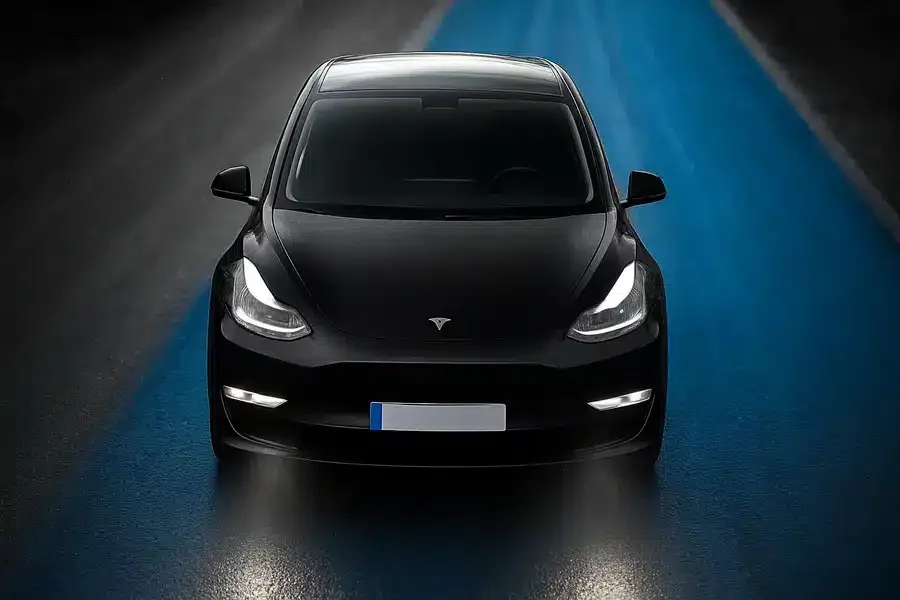
Tesla (TSLA) delivered 418,227 vehicles in the fourth quarter, down 15.6% year-over-year and missing analyst estimates by 3.7%.
The miss underscores growing headwinds for the electric vehicle leader amid intensifying competition and shifting consumer demand patterns.
Key Takeaways
- Q4 deliveries fell 15.6% to 418,227 vehicles, missing estimates
- Full-year 2025 deliveries dropped 9% to 1.64 million units
- Tesla loses global EV crown to China’s BYD
Market reaction & context
Analysts had expected Tesla to deliver 434,487 vehicles in the quarter, representing a 12.3% decline1. The actual 15.6% drop marks Tesla’s second consecutive year of declining annual deliveries, with 2025 sales falling to 1.64 million from 1.79 million in 20242.
The disappointing performance comes as Tesla faces mounting pressure from Chinese rival BYD, which has overtaken Tesla as the world’s largest EV manufacturer. Tesla’s struggles contrast with the broader EV market, where competition has intensified significantly over the past year.
Detailed analysis
Tesla’s Q4 delivery figure of 418,227 represents a significant shortfall from the 495,570 vehicles delivered in the same quarter of 20243. The company’s full-year decline of 9% marks its worst annual performance in recent years, highlighting challenges in maintaining growth momentum4.
The delivery miss reflects broader headwinds facing the EV industry, including reduced government incentives, higher interest rates affecting vehicle financing, and increased competition from both traditional automakers and new entrants. Tesla’s performance also comes amid uncertainty over federal tax credit policies that have supported EV adoption.
Competitive landscape
Tesla’s stumble has allowed China’s BYD to claim the global EV leadership position, marking a significant shift in the industry’s competitive dynamics5. The change underscores how rapidly the EV landscape has evolved, with Chinese manufacturers gaining substantial market share through aggressive pricing and product expansion.
The competitive pressure is expected to continue intensifying in 2026, with multiple automakers launching new EV models and expanding production capacity. Tesla’s ability to regain momentum will likely depend on new product launches and potential price adjustments.
Outlook
Looking ahead to the first quarter of 2026, analyst consensus estimates suggest Tesla deliveries could reach 377,000 vehicles, which would represent an 18% decline from previous projections6. This outlook reflects continued caution about near-term demand trends and competitive pressures.
Tesla has not yet provided official guidance for 2026, but the company faces pressure to demonstrate it can reverse the declining delivery trend while maintaining profitability in an increasingly competitive market.
Not investment advice. For informational purposes only.
References
1(January 2, 2026). “Tesla loses EV crown to China’s BYD as competition, tax”. Reuters. Retrieved January 2, 2026.
2(January 2, 2026). “Tesla’s quarterly deliveries fall more than expected on lower EV”. Yahoo Finance. Retrieved January 2, 2026.
3(January 2, 2026). “Tesla’s Quarterly Deliveries Fall More Than Expected on Lower EV”. Claims Journal. Retrieved January 2, 2026.
4(January 2, 2026). “Tesla Q4 Vehicle Deliveries Fall 16%. Miss Already Low Expectations.”. Investor’s Business Daily. Retrieved January 2, 2026.
5(January 2, 2026). “Tesla’s fourth quarter sales fell a lot more than expected”. The Verge. Retrieved January 2, 2026.
6(January 2, 2026). “Tesla no longer world’s biggest EV maker after its sales”. CBS News. Retrieved January 2, 2026.