

Tesla (TSLA.O) China-made EV deliveries surged 24.4% year-on-year to 89,091 units in June, extending a streak that underpins analyst forecasts for a record second-quarter global delivery tally of roughly 402,780 vehicles.
For long-horizon investors, the durability of the Shanghai factory’s output – which serves both the Chinese domestic market and European export demand – matters as much as any single monthly print, signalling that the revenue base is broadening beyond a North American market where sales remain under pressure.1
Key Takeaways
- Shanghai deliveries rose 24.4% YoY to 89,091 units in June.
- Q2 combined China sales and exports climbed 32.8% year-on-year.
- Rival BYD sold 557,090 BEVs globally in Q2, threatening Tesla’s top ranking.
Streak in Context
June’s 24.4% gain follows a 39.4% year-on-year increase in May, according to data released Thursday by the China Passenger Car Association – a moderation in the growth rate but still the eighth consecutive month of expansion.1 By comparison, domestic Chinese EV giant BYD (002594.SZ) posted 557,090 battery-electric vehicle sales globally in the second quarter, a figure that could hand BYD back the title of world’s top EV seller after Tesla briefly claimed it in Q1.1
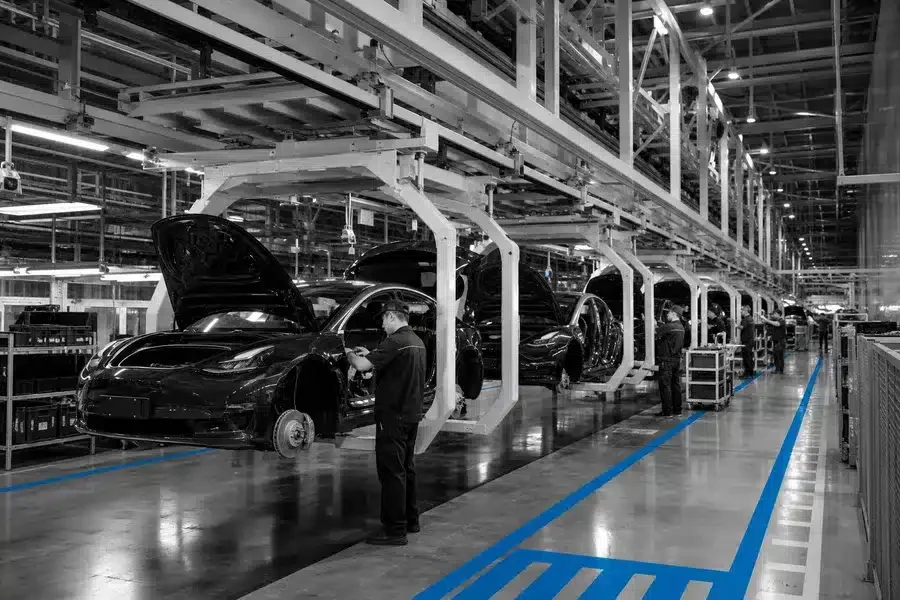
Tesla’s Shanghai plant is a dual-purpose asset: it supplies Model 3 and Model Y vehicles to Chinese buyers while also acting as the primary export hub for Europe, a structure that has allowed a single facility to amplify its strategic value across two of the world’s largest EV markets. Investors tracking Tesla’s broader European strategy will note that demand there is being pulled forward by higher fuel costs linked to geopolitical tensions in the Middle East.
Why Europe Is Amplifying Shanghai’s Numbers
A spike in fuel prices following the U.S.-Israel conflict with Iran has prompted more European consumers to switch to electric vehicles, according to Reuters, providing an external demand tailwind that Tesla’s Shanghai export line is well-positioned to capture.2 That tailwind has helped offset declining sales in North America, which analysts say remains a structural drag on Tesla’s volume mix in the near term.
For the full second quarter, Tesla’s combined China sales and exports from the Shanghai facility rose 32.8% year-on-year – a rate that analysts say is consistent with a Q2 global delivery print around 402,780 units, a roughly 5% increase versus the year-earlier period.1 The company was expected to release its official global delivery figures later on Thursday.
Competitive Landscape
BYD’s second consecutive month of global sales growth in June underscores the intensity of competition Tesla faces at the premium and mass-market ends of the Chinese EV segment.1 The Chinese automaker’s accelerating overseas expansion – particularly into Europe – means Tesla can no longer rely on geographic diversification alone as a competitive moat.
In North America, where Tesla’s sales have slipped, broader industry trends are also softening; Ford’s U.S. second-quarter sales fell 10%, illustrating that demand headwinds are not unique to the EV segment.3 Still, Tesla’s Shanghai concentration means that any sustained Chinese consumer or regulatory shock would carry outsized portfolio risk for shareholders.
Management Signals and Investor Implications
“The recovery in Europe and resilient demand in China are expected to help offset declining sales in North America,” Reuters reported, citing analyst expectations ahead of the Q2 delivery release.1
For long-horizon investors, the key question is whether the current European demand surge – partly an emergency response to fuel prices – will prove sticky enough to support Shanghai’s export volumes once the geopolitical premium in energy prices eases. The 32.8% Q2 growth rate from Shanghai is encouraging, but the sequential deceleration from May’s 39.4% monthly gain suggests the pace of recovery is beginning to normalise.
Conclusion
Tesla’s Shanghai plant is demonstrating genuine output durability, with eight months of consecutive year-on-year growth providing a foundation that supports the bull case for a strong Q2 global delivery report. The facility’s dual role as a domestic sales engine and European export hub gives it a structural flexibility that peers cannot easily replicate in the short term. However, BYD’s scale and the concentration of Tesla’s international manufacturing in a single Chinese location remain the most material risks for investors with multi-year time horizons.
Not investment advice. For informational purposes only.
References
1Reuters (2 July 2026). “Tesla’s China-made EV sales rise 24.4% year on year in June”. Reuters. Retrieved 2 July 2026.
2Thomson Reuters (2 July 2026). “Tesla’s China-made EV sales rise 24.4% year on year in June”. WTVB | 1590 AM · 95.5 FM. Retrieved 2 July 2026.
3*Walter Bloomberg (@DeItaone) (2 July 2026). “$TSLA – Tesla China Sales Rise for Eighth Month”. X (formerly Twitter). Retrieved 2 July 2026.