

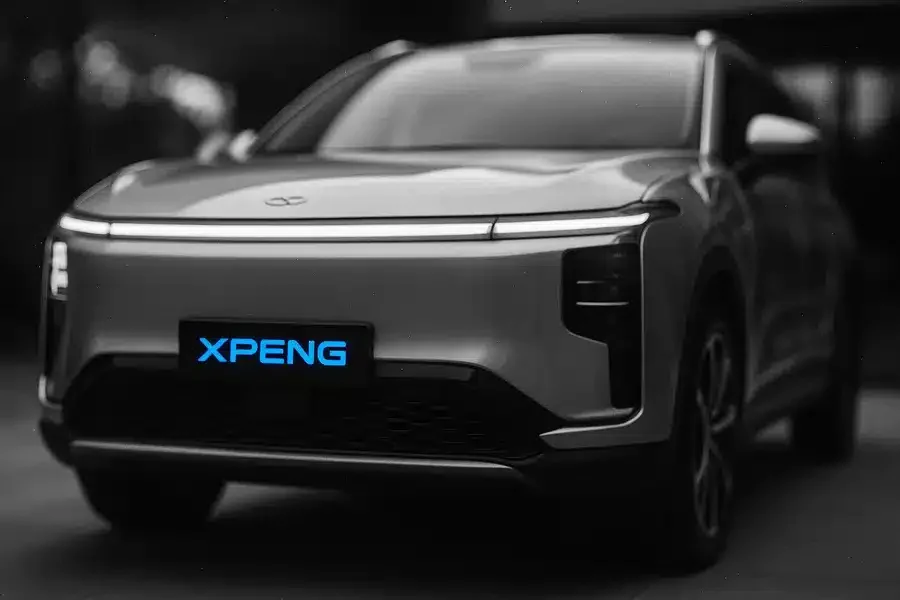
Electric vehicle manufacturer Xpeng (XPEV) announced Monday the commencement of mass production for its inaugural robotaxi at its Guangzhou facility, setting sights on achieving fully autonomous operations by early 2027. This strategic initiative places the company in direct competition with Tesla and Waymo within the high-value autonomous vehicle sector, potentially generating billions in revenue through ride-hailing services.
Key Takeaways
- Xpeng commences robotaxi mass production, aiming for 2027 autonomous launch
- Company pursues global expansion with 7,000+ flying car orders
- Humanoid robots and aerial vehicles enhance mobility strategy
Market Context and Strategic Positioning
The robotaxi from Xpeng marks China’s inaugural full-stack domestically developed and mass-manufactured autonomous vehicle, featuring four Turing AI chips that deliver 3,000 tera operations per second of computing power 1. The organization intends to initiate robotaxi testing in Guangzhou this year, with 2027 representing a “critical year” for international testing collaborations 2.
According to Vice Chairman Brian Gu, the company anticipates manufacturing hundreds to thousands of robotaxis during the upcoming 12 to 18 months. Distinguished from competitors who depend on lidar and high-precision mapping systems, Xpeng’s robotaxi employs a pure vision approach that can manage various road conditions worldwide 3.
Diversified Technology Portfolio
Beyond autonomous vehicle development, Xpeng has secured over 7,000 orders for its “flying cars,” with most orders originating from China where the company pursues aviation authority clearance 4. The Land Aircraft Carrier, engineered for personal short-distance flights, incorporates a six-axis, six-propeller design that ensures secure landing even when two diagonal rotors malfunction.
The organization’s projected annual manufacturing capacity for flying vehicles totals 10,000 units, beginning with an initial capacity of 5,000 units. At maximum production levels, one aircraft can complete assembly every 30 minutes 5.
AI-Driven Humanoid Robotics
Xpeng additionally plans extensive production of humanoid robots during the fourth quarter of 2026. The Next-Gen IRON robots incorporate 82 degrees of freedom across the body and include three Turing AI chips 6. CEO He Xiaopeng stated that within 10 to 20 years, the robotics business should surpass the automotive division since “there will be more use cases for humanoid robots in our lives” 7.
These robots will initially function as receptionists or in sales capacities, with Baosteel serving as an ecosystem partner for industrial implementations. The company has established its inaugural embodied intelligence data facility in Guangzhou to tackle training data obstacles 8.
Global Expansion and Partnerships
Xpeng presently functions in approximately 60 countries beyond China, producing roughly 10% of sales volume and 15% of revenue from international markets last year. Gu indicated that within five to 10 years, “more than 50% of the revenue should come from outside of China” 9.
The organization has enhanced its collaboration with Volkswagen, which became the inaugural customer for Xpeng’s VLA 2.0 large model. In March 2026, their first co-developed vehicle, the ID.UNYX 08 all-electric SUV, completed production 10.
Investment Implications
Xpeng’s comprehensive strategy toward future mobility technologies establishes a distinctive position among Chinese EV manufacturers. The company’s integrated AI development expertise, spanning from chips to operating systems, offers potential competitive benefits in the emerging autonomous vehicle marketplace.
Nevertheless, investors should track regulatory approval schedules for both flying vehicles and robotaxis, as these represent substantial revenue possibilities but encounter complex certification procedures across various markets.
Not investment advice. For informational purposes only.
References
1Adam Pond (April 23, 2026). “China: Xpeng’s Plans for ‘Flying Cars’ and Robotaxis”. EV Magazine. Retrieved May 18, 2026.
2Thomson Reuters (Apr 22, 2026). “China’s Xpeng expects to start delivering ‘flying’ cars in 2027”. 740 The FAN. Retrieved May 18, 2026.
3“XPENG Shares Achievements in Physical AI Emergence: Unveils XPENG VLA 2.0, Robotaxi, Next-Gen IRON, and Flying Car” (Nov 5, 2025). XPENG Motors. Retrieved May 18, 2026.
4Mint (Apr 23, 2026). “XPeng unveils an ambitious roadmap-flying cars by 2027, humanoid robots from late 2026”. Facebook. Retrieved May 18, 2026.
5Georgia Collins (April 24, 2026). “Xpeng Scales Production for ‘Flying Cars’ and Robotaxis”. Technology Magazine. Retrieved May 18, 2026.
6Mint (Apr 23, 2026). “XPeng unveils an ambitious roadmap-flying cars by 2027, humanoid robots from late 2026”. Instagram. Retrieved May 18, 2026.
7Cəmil Hüseynzadə (Jan 9, 2026). “Xpeng begins robotaxi trials and mass production of humanoid robots”. Tech.az. Retrieved May 18, 2026.
8Firstpost (Apr 23, 2026). “Chinese EV maker Xpeng expects to begin delivering its ‘flying cars’ by 2027”. Facebook. Retrieved May 18, 2026.
9CNBC (Nov 5, 2025). “Chinese EV maker Xpeng to launch robotaxis, humanoid robots”. LinkedIn. Retrieved May 18, 2026.
10Adam Pond (April 23, 2026). “China: Xpeng’s Plans for ‘Flying Cars’ and Robotaxis”. EV Magazine. Retrieved May 18, 2026.